

That $8 bottle of water in your room is not a hydration product – it is a vending machine with a hotel attached. Hotel minibar prices in 2026 still run five to ten times the corner-store equivalent: $6 to $8 for water, $7 to $9 for beer, $4 to $6 for a soda, and $25 to $30 for a miniature 200ml liquor bottle that holds less than two shots. Multiply by a week and the minibar quietly outbills the resort fee. Here is what everything actually costs, why the prices are what they are, and – more useful – the nine ways travelers never pay minibar money at all.
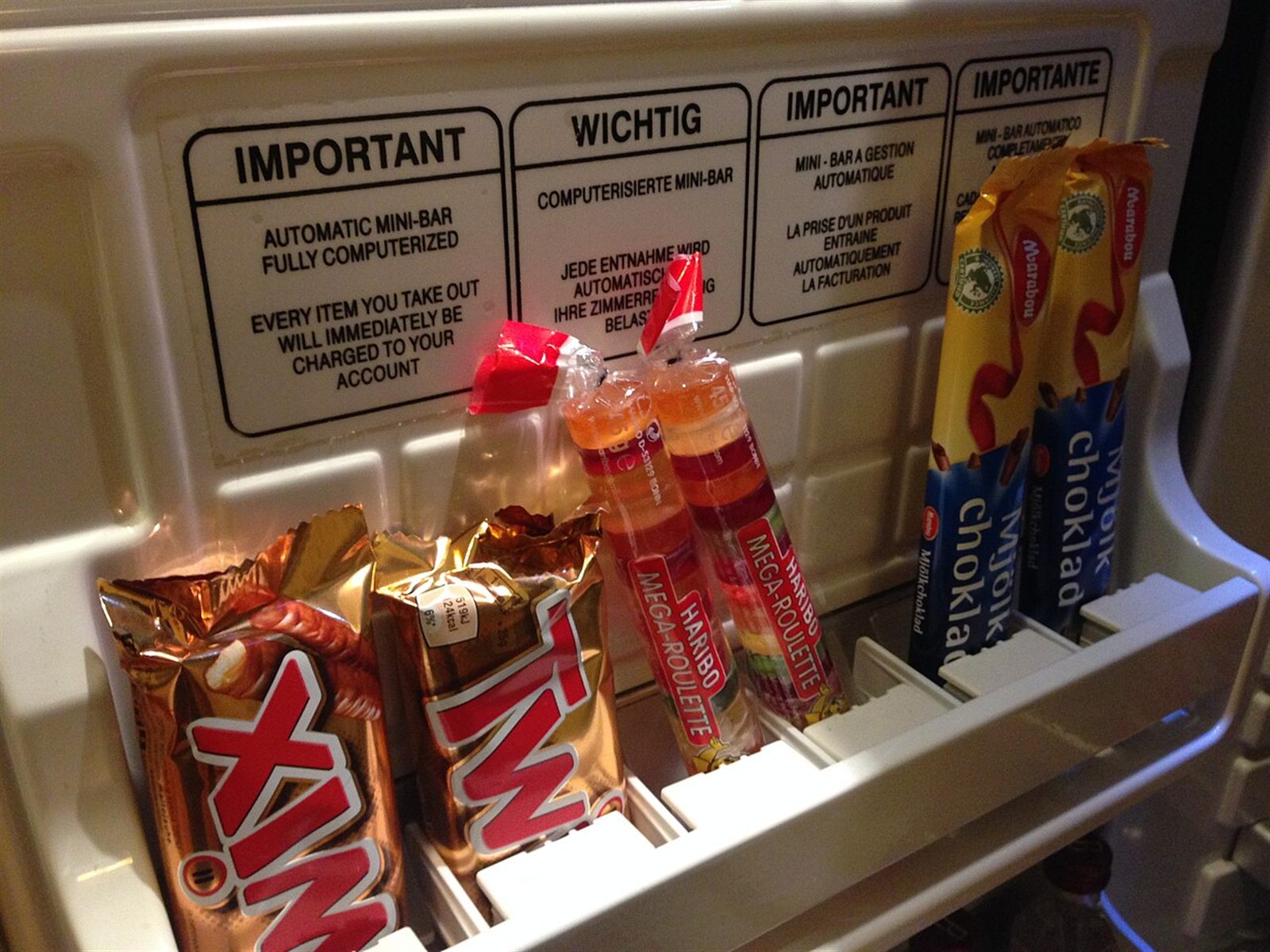
What Hotel Minibar Items Cost in 2026
Typical hotel minibar prices, assembled from published rate cards and guest-reported folios:
- Bottled water: $6 to $8 – the single most profitable item in the room, and the first thing hotels moved from free to paid.
- Soda or juice: $4 to $6 per can or small bottle.
- Beer: $7 to $9 per bottle, more at resorts.
- Wine: $12 to $18 for a 187ml split – a quarter bottle.
- Spirits: $25 to $30 for a 200ml bottle; guests report $26 to $28 mini-bottles at major chains. Per ounce, that beats the bar downstairs.
- Snacks: $4 to $7 for chocolate bars and nuts that cost a dollar or two at any convenience store.
The pattern that matters: you are not paying for the drink, you are paying for its address. The same can of cola costs $1 in the lobby shop two floors down, if the hotel has one.
Why Minibar Prices Are What They Are
The markup is not (mostly) greed – it is arithmetic. A minibar is the most expensive retail space a hotel operates: tiny volume, one customer at a time, and a restocking labor loop that sends a staff member into the room after every checkout, counts every item against an inventory sheet, and bills the folio before the next guest arrives. Hotels also eat spoilage, expiry checks, and theft, and the sensor hardware that automates billing costs real money to install and maintain. Spread across maybe two or three sales per room per week, each item has to carry its share of the whole apparatus – which is how a $0.50 bottle of water becomes an $8 folio line.
The Sensor Trap: Charged for Just Looking
Modern minibars are weight- or sensor-activated: lift an item for more than about 60 seconds and the folio is billed automatically, whether or not you consume it. Put it back late and you can still be charged; the system has already posted. Industry veterans have estimated that as many as nine in ten automatic minibar charges at some properties are resolved as errors – items lifted to inspect, moved to make space, or replaced a minute too late.
The aggressive frontier is the storage fee. Some Las Vegas resorts now post notices that storing personal items in the minibar – or even altering the existing items – triggers a $50-per-stay fee, which turns the fridge from a vending machine into a trap with a door. The lesson generalizes: if a room has a sensor minibar, treat the fridge as hotel property with an alarm on it. Keep your own drinks in the ice bucket or ask – in writing or at the desk – for the fridge to be emptied. Many hotels will do it free if you ask nicely; charging for storage is the exception, not the rule, but you need to know which room type you are in before you rearrange anything.
The Nine Moves That Beat the Minibar
Ranked by how reliably they work:
- Ask for the water. Most front desks will hand over complimentary bottles on request, and housekeeping restocks the coffee tray daily. The free water in the hallway gym is often the same water the minibar sells for $8.
- Shop once on arrival. A convenience store run on day one – water, snacks, a six-pack – costs about one minibar beer. Rooms above a certain tier have real fridges for exactly this reason.
- Request an empty fridge. Politely asking the front desk to clear the minibar removes the temptation and, at most non-sensor properties, costs nothing. At sensor properties, ask anyway and get the answer in writing.
- Photograph the minibar at check-in. Timestamped proof of what was there – and that you did not touch it – ends most disputes in one sentence at checkout.
- Check the folio the night before departure, not at the desk at 7 AM with a taxi waiting. Sensor charges post instantly; the night audit can reverse them just as instantly.
- Dispute phantom charges without guilt. “I have a photo from check-in” works. Front desks reverse these constantly, which is precisely why the errors persist.
- Book the room class with a kitchen. Aparthotel-style rooms come with an empty, guest-owned fridge – the entire minibar problem engineered out of your stay. Our aparthotel comparison prices that trade.
- Eat breakfast where it is included. A minibar pastry at $6 is the same pastry the buffet puts out for free – and our breakfast economics guide shows the buffet itself often beats the a-la-carte menu.
- Know what the folio already includes. Some rates and most club-level rooms stock the minibar free; the charges only appear when the rate does not cover them. Check before you assume – the same way a resort fee hides in plain sight, minibar credits hide inside some room rates.
When the Minibar Is Actually Worth It
Two situations justify the markup, and neither is thirst. The first is arrival night: you land at 11 PM, the neighborhood is shut, and the $9 beer in your room is cheaper than a $40 rideshare to find one. The second is the incidental-hold effect – the minibar charge is an estimate on your card until checkout, and some hotels include minibar spending in the incidental hold they place on your card, so a stocked fridge can mean a bigger freeze on your available balance. If your card is tight that week, keep the minibar untouched and the hold smaller.
Otherwise, hotel minibar prices are a convenience tax you only pay by accident. Photograph the shelf, buy your own supplies on day one, check the folio before bed, and the most expensive refrigerator in the building will never bill you a cent.